
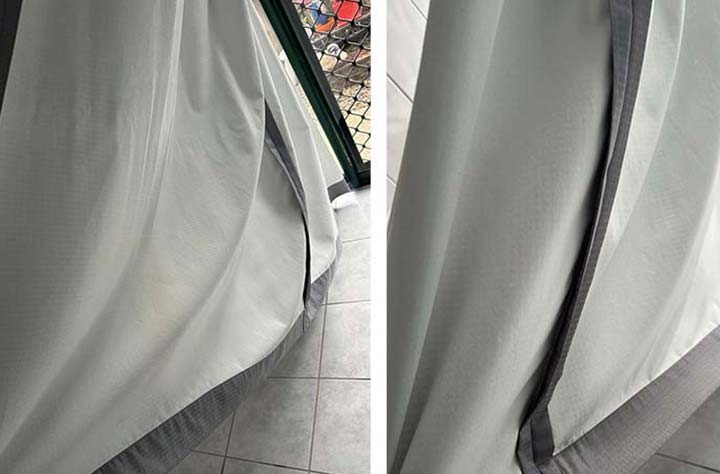
Your curtains likely still smell after washing because the odor source wasn’t fully removed, or they dried too slowly, allowing mildew to set in. The fix usually involves stripping buildup, killing bacteria, or changing how you dry them. This isn’t about washing harder—it’s about washing smarter.
I’ll walk you through exactly why this happens, how to diagnose your specific problem, and the step-by-step fixes that actually work. You’ll also learn how to prevent it from happening again.
Why This Problem Matters More Than You Think
That lingering smell isn’t just unpleasant. It signals that something is still living or trapped in your curtain fibers. It could be mold spores, bacterial colonies, or embedded body oils that turned rancid.
If you rehang curtains that smell, you’re putting those contaminants back into your room. For anyone with allergies, asthma, or chemical sensitivities, this isn’t a minor issue. It can trigger real symptoms.
The good news: once you understand what you’re actually fighting, you can solve it in one afternoon.
What’s Really Causing the Smell
Smells that survive washing fall into three main categories. You need to know which one you’re dealing with before choosing a fix.
1. Mildew from Slow Drying
This is the most common cause. Curtains are thick, lined, or made from tightly woven fabric. They hold water like a sponge. If they don’t dry within a few hours, mildew spores—always present in the air—find a perfect breeding ground.
The smell you notice is the metabolic waste from mildew. Washing removes some of it, but if the curtains stay damp too long again, the smell comes right back. Sometimes the wash water itself is contaminated with mildew from your machine.
Signs this is your problem:
- The smell is musty, earthy, or damp-towel-like
- The curtains took more than 4 hours to dry
- Your bathroom or laundry room has poor ventilation
2. Bacterial Growth from Body Oils and Skin Cells
Curtains near beds, couches, or high-traffic areas absorb skin oils, sweat, and dead skin cells. Over months or years, bacteria feed on this organic matter. Their byproducts smell sour or rancid.
A regular wash cycle with a mild detergent often isn’t enough to break down the biofilm bacteria create. Think of it like workout clothes that stay stinky after washing. Same principle.
Signs this is your problem:
- The smell is sour, like old sweat or greasy laundry
- Bedroom curtains or living room drapes near seating
- The fabric feels slightly stiff or waxy even after washing
3. Detergent and Fabric Softener Buildup
This one surprises people. You’re using products meant to clean and soften, but they’re actually making the problem worse over time.
Fabric softeners and many liquid detergents leave a waxy residue that coats fibers. This residue traps odors, attracts dirt, and creates a hospitable environment for bacteria. It also reduces the fabric’s absorbency, which ironically makes drying slower—looping back to problem number one.
Signs this is your problem:
- Curtains feel greasy, sticky, or stiff
- You regularly use fabric softener or dryer sheets
- Towels or other laundry items also hold onto smells
- You see suds in the washer during the rinse cycle
Other Possible Causes You Shouldn’t Ignore
Your washing machine is contaminated. Front-loaders are notorious for mold growth in the door gasket. If your machine smells, your laundry will too.
Smoke residue. Cigarette, candle, or fireplace smoke penetrates deep into fibers and requires specific treatment.
Cooking grease. Kitchen curtains absorb aerosolized oils that go rancid. Standard detergent won’t cut through it.
How You Can Diagnose Your Exact Problem
Before you reach for a product, do these two tests.
The sniff test. When are the curtains at their worst? Right out of the washer? That points to machine contamination. After partially drying? Mildew. Within a day of rehanging? Likely bacterial or body oil issues.
The feel test. Rub a clean white cloth over the dry curtains. Any residue transfer means buildup. If the fabric feels cool or clammy when it should be dry, you’re dealing with retained moisture and probable mildew.
Step-by-Step: The Deep Clean That Actually Works
Skip the regular wash cycle. You need a targeted approach.
What You’ll Need
- White distilled vinegar (5% acidity)
- Baking soda (optional, for the rinse stage)
- Oxygen bleach (sodium percarbonate-based, like OxiClean) for whites and colorfast fabrics
- An enzyme-based laundry booster for protein-based odors
- A clean washing machine
Step 1: Strip the Buildup First
If you suspect detergent or softener residue, you need to strip it before sanitizing. Sanitizers can’t penetrate the waxy coating.
Fill your bathtub or a large basin with the hottest water the fabric can tolerate. Check the care label first. Most cotton, polyester, and cotton-poly blends can handle hot water. Silk, wool, or delicate synthetics cannot.
Add 1 cup of white vinegar per gallon of water. Submerge the curtains and let them soak for at least 4 hours, overnight if possible. You’ll likely see the water turn cloudy or gray. That’s the buildup releasing.
Drain and squeeze out the curtains. Do not wring aggressively—that can distort the fabric.
Step 2: Sanitize Based on the Odor Type
For mildew and general mustiness:
Wash the curtains in the machine using the hottest water safe for the fabric. Add 1 cup of white vinegar directly to the drum at the start of the wash. Do not add detergent in this cycle.
The acetic acid in vinegar disrupts the cell membranes of mold and mildew. It also neutralizes the alkaline residues left by detergents.
After the wash completes, run a second cycle with an oxygen bleach product, following the package directions for soaking. Oxygen bleach releases hydrogen peroxide when dissolved, which kills mold spores through oxidation without the harshness of chlorine bleach.
For bacterial and body oil odors:
Use an enzyme-based laundry booster instead of vinegar. Products labeled for pet odors or athletic wear work well here. These contain protease enzymes that break down protein-based organic matter that bacteria feed on.
Follow the product’s soaking instructions carefully. Most enzymes need time to work—a 30-minute soak minimum, often longer. Water temperature matters too. Too hot, and you denature the enzymes. Follow the label.
For smoke or grease residue:
Add 1/2 cup of washing soda (sodium carbonate) to the wash along with your regular detergent. Washing soda is more alkaline than baking soda and cuts through oily residues that trap odors.
For heavy smoke damage, you may need a commercial smoke-removing laundry additive, but try washing soda first. It’s inexpensive and often effective enough.
Step 3: The Rinse That Tells You If You’re Done
Run an extra rinse cycle after washing. When the cycle finishes, open the machine and smell the wet curtains. They should smell like nothing—just clean, damp fabric.
If you still detect odor, repeat the relevant sanitizing step. Re-drying won’t fix what the wash didn’t remove.
Step 4: Dry Them Fast—This Is Critical
Speed matters more than heat. Mildew spores can germinate in as little as 4-6 hours on damp fabric.
If your dryer is large enough and the fabric can tolerate it, tumble dry on the appropriate setting. Do not overcrowd. The curtains need air circulation.
For curtains that must air dry, hang them outside in direct sunlight if possible. UV radiation is a natural antimicrobial. Even on a cool day, sun exposure helps. Indoors, use a fan pointed directly at the hanging curtains and keep windows open.
Never dry curtains in a closed, unventilated room. You’re recreating the conditions that caused the problem.
What Won’t Work (Despite Popular Advice)
Vodka sprays. Spraying vodka on dry curtains can temporarily mask odors because ethanol has some antimicrobial properties. But if the odor source is deep in the fibers or there’s buildup present, surface treatment won’t solve it. Save this for freshening up between washes, not fixing a real problem.
Febreze and other fabric sprays. These mask odors with fragrance and contain cyclodextrins that trap some odor molecules. They don’t kill mold or bacteria, and they add another layer of chemical residue to the fabric.
Dryer sheets. Adding more waxy residue to already-buildup-laden fabric is counterproductive. They’re part of the problem, not the solution.
Bleach (sodium hypochlorite). Chlorine bleach can damage many curtain fabrics, discolor dyes, and weaken fibers. It also doesn’t address the root causes better than oxygen bleach, which is safer for most materials. Reserve chlorine bleach only for white, bleach-safe cotton, and only when you’re certain the label permits it.
How You Can Prevent This Next Time
Once you’ve fixed the smell, keep it from coming back.
Wash curtains more frequently. The longer body oils and dust accumulate, the harder they are to remove. Every 3-6 months is reasonable for most households. Pet owners and smokers should aim for every 2-3 months.
Stop using fabric softener on curtains. It reduces the fabric’s natural breathability and encourages faster re-soiling. If static is a concern with synthetic curtains, a small amount of white vinegar in the rinse cycle accomplishes the same thing without residue.
Clean your washing machine monthly. Run an empty hot cycle with 2 cups of vinegar or a commercial machine cleaner. Wipe down the door gasket after every wash if you have a front-loader. Leave the door open between uses.
Check your drying setup. If curtains consistently take more than 4 hours to dry in your space, you need better ventilation or a dehumidifier in the room while drying.
Consider the fabric itself. Some curtain materials are simply harder to keep fresh. Thermal-backed curtains with foam or rubberized linings degrade over time and trap odors permanently. If you’ve deep cleaned twice and the smell persists, the lining may be breaking down chemically. At that point, replacement is the only real solution.
When You Should Replace Instead of Clean
This is a practical judgment call, not a cleaning failure.
Curtains that have been contaminated by heavy smoke damage, prolonged flooding, or years of embedded mildew may never come fully clean. If you’ve stripped, sanitized, and dried them properly twice without success, the cost of your time and products may exceed the cost of new curtains.
The smell of persistent mildew that won’t lift after two thorough treatments is often a sign that the mold has penetrated the fiber’s internal structure, not just the surface. That’s not cleanable.
What to Look for When You Buy Your Next Curtains
If you do replace them, choose machine-washable, unlined or lightly lined curtains that can handle hot water. Look for fabrics like cotton, polyester, or cotton-poly blends marked as machine washable.
Avoid foam-backed thermal curtains unless you’re willing to dry clean them. Dry cleaning kills odor-causing organisms through solvents and heat, but it’s expensive and not something you’ll do frequently.
Comparison: Common Curtain Cleaning Methods
| Method | Best For | Odor Removal | Risk to Fabric | Cost |
|---|---|---|---|---|
| Vinegar soak + hot wash | Mildew, buildup | High | Low | $ |
| Enzyme wash | Body oils, bacteria | High | Low | $$ |
| Oxygen bleach soak | Mildew, general sanitizing | High | Low on colorfast fabrics | $$ |
| Washing soda + detergent | Grease, smoke | Medium-High | Low | $ |
| Dry cleaning | Delicate fabrics, heavy odors | High | Lowest | $$$ |
| Fabric sprays (Febreze type) | Between-wash freshening | Low (masks) | None | $ |
| Steam cleaning | Light odor, wrinkles | Medium | Low | $$ |
FAQ: Your Curtain Odor Questions Answered
Why do my curtains smell worse after washing?
Your washing machine is likely contaminated, or the warm, damp environment of the wash awakened dormant bacteria and mildew spores without killing them. Strip your machine and rewash the curtains using the sanitizing method above.
Can I use bleach on my white curtains?
Only if the care label explicitly permits chlorine bleach. Otherwise, use oxygen bleach (sodium percarbonate). It whitens and sanitizes without the same fiber damage risk.
Does vinegar really kill mold, or does it just mask the smell?
White vinegar with 5% acetic acid kills approximately 82% of mold species according to research published in environmental microbiology journals, including common household molds like Penicillium and Aspergillus. It’s not a 100% kill rate, which is why following with oxygen bleach or thorough sun drying improves results. It is genuinely antimicrobial, not just deodorizing.
How do I get smoke smell out of curtains?
Soak in a solution of 1/2 cup washing soda per gallon of hot water for 4+ hours, then wash with detergent and an additional 1/2 cup washing soda. Avoid vinegar for smoke—the acidity isn’t as effective against the alkaline components of smoke residue. Repeat if needed. Heavy smoke may require a commercial laundry smoke remover.
Can I wash dry-clean-only curtains?
Some dry-clean-only curtains can be gently hand-washed, but you’re taking a risk. Fabrics like silk, velvet, or lined draperies with stiff interfacing can shrink, lose shape, or have the lining separate. If the curtains are expensive or irreplaceable, go to a dry cleaner and explain the odor problem specifically. They have solvents and processes designed for this.
Why do my curtains smell musty even after line drying outside?
If you line dried in shade or humid conditions, they may not have dried fast enough. Also, outdoor air near vegetation carries mold spores. The UV from direct sun is what helps kill organisms. Try sun-drying, or bring them inside to dry with a fan after the wash.
Is it safe to put curtains in the dryer?
Most cotton, polyester, and cotton-poly blend curtains can go in the dryer. Use medium heat and remove them while slightly damp to prevent wrinkles. Check the care label. Silk, wool, and some synthetics like acetate cannot. Sheer curtains may melt at high heat.
How can I tell if the smell is from the curtains or the wall behind them?
Run a clean cloth along the wall and the curtain rod. Smell the cloth. If the wall smells, you have a moisture or mold problem in the room itself, and cleaning the curtains won’t permanently solve it. Check for leaks, condensation, or poor ventilation behind the curtains.
Key Takeaways
The smell that survives washing is almost always mildew from slow drying, bacterial residue from body oils, or product buildup that traps both. A standard wash cycle can’t fix these—you need stripping, sanitizing, and fast drying.
Diagnose which problem you have before treating. Vinegar works for mildew and buildup. Enzymes work for body oils and bacteria. Washing soda works for grease and smoke.
Speed of drying is as important as the cleaning method. If your drying setup can’t get curtains dry within a few hours, you’ll fight this problem forever.
If you’ve deep cleaned correctly twice and the smell persists, the fabric or lining has likely degraded beyond saving. Replace the curtains and choose more washable materials next time.
Your Next Steps
- Identify your odor type using the descriptions above.
- Strip buildup first if you’ve used fabric softener or standard detergent.
- Sanitize with vinegar, enzymes, or oxygen bleach based on your diagnosis.
- Dry as fast as possible—sunlight, fan, or dryer.
- If the smell returns, repeat once. If it still returns, consider replacement.
One final note: if you live in a consistently humid climate, curtain odor may be a recurring battle. Using a dehumidifier in the room where you dry laundry and choosing lighter, faster-drying curtain fabrics will make more difference than any cleaning product can.