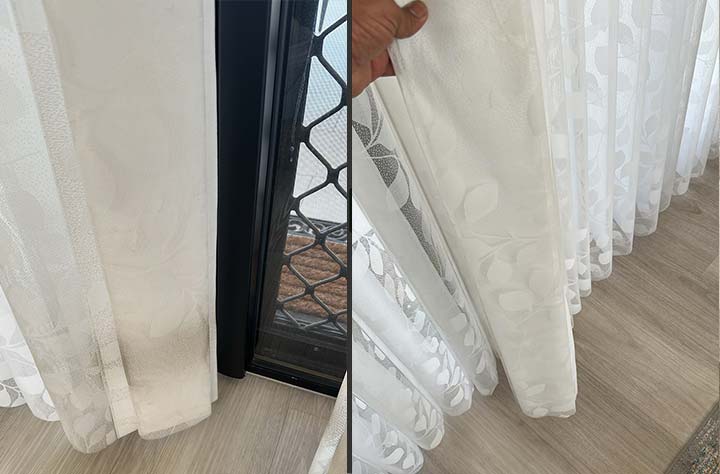
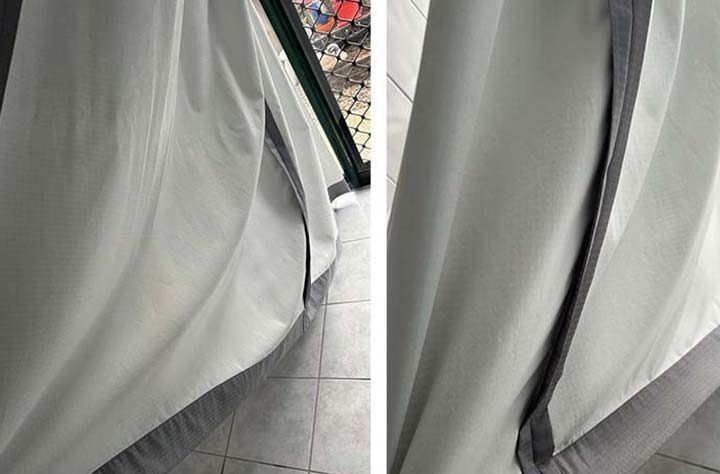
Curtain Steam Cleaning
What it is: Hot water extraction using pressurised steam, injected deep into the fabric and immediately extracted along with suspended soils, allergens, and bacteria.
Who needs it: Homeowners with cotton or polyester curtains showing general dullness, light staining, or those seeking an annual hygienic reset.
Common problems solved: General dirt load, dust mite infestation, seasonal pollen buildup, and light beverage spills.
Expected results: A visibly brighter, softer curtain restored to original colour vibrancy. Significant allergen and bacteria reduction. A fresh, clean scent.
Recommended frequency: Every 9–12 months for residential settings; every 6 months for allergy-sensitive households.
Book curtain steam cleaning →
Curtain Deep Cleaning
What it is: An intensive multi-phase process involving pre-soaking, specialised agitation, and repeated rinses to expel soils that have bonded to fibres over many years.
Who needs it: Landlords preparing end-of-lease properties, new homeowners taking over a property with existing curtains, or anyone who hasn't had their curtains cleaned in 3+ years.
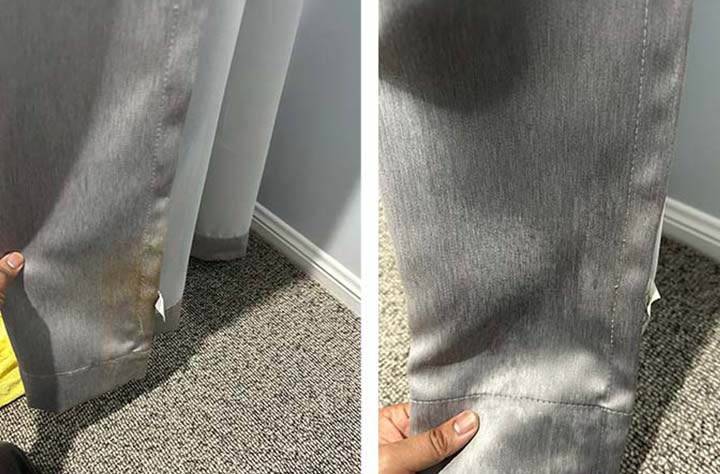
Common problems solved: Severe nicotine yellowing, kitchen grease film, years of accumulated urban dust, and deeply set pet dander.
Expected results: A dramatic transformation, revealing the original fabric texture and colour previously hidden under layers of grime. Elimination of chronic musty smells.
Recommended frequency: As needed, typically upon change of tenancy or when standard cleaning no longer restores appearance.
Curtain Stain Removal
What it is: Analytical, targeted treatment identifying specific stain chemistry (tannin, protein, oil, dye) and applying the precise agent required to dissolve the bond between the contaminant and the fabric.
Who needs it: Homeowners dealing with isolated incidents—red wine on dining room drapes, ink on study curtains, pet vomit stains, or kids’ art mishaps.
Common problems solved: Red wine, coffee, ink, crayon, grease, urine, vomit, and mud stains.
Expected results: Complete or near-complete removal of the spot without halo rings or fabric damage, preserving the curtain’s uniformity.
Recommended frequency: As needed, immediately when spills occur for best results.
Book curtain stain removal →
Curtain Odour Removal
What it is: Advanced deodorisation penetrating the core of each fibre using vapour-phase technology to neutralise the volatile organic compounds causing the smell, not just cover it up.
Who needs it: Homeowners dealing with persistent pet odours, cooking smells from open-plan kitchens, musty storage odours, or cigarette and cigar smoke.
Common problems solved: Pet odours, cigarette smoke, marijuana smoke, deep-fry cooking smells, and damp storeroom mustiness.
Expected results: A genuinely neutral-smelling curtain that no longer releases odours when warmed by sunlight or humidity.
Recommended frequency: As odours become apparent, or seasonally for homes with indoor pets and smokers.
Book curtain odour removal →
Curtain Sanitisation
What it is: The application of EPA-registered, broad-spectrum disinfectants that help reduce pathogens, including influenza, staph, and E. coli, without bleaching or weakening fabric.
Who needs it: Healthcare clinics, aged care facilities, childcare centres, and family homes during flu season or after illness.
Common problems solved: Bacterial contamination, viral contamination, fungal spores, and dust mite allergen proteins.
Expected results: A clinically hygienic surface that contributes to a healthier indoor ecosystem and provides documented peace of mind for high-risk environments.
Recommended frequency: Monthly for commercial health settings; quarterly for residential allergy management.
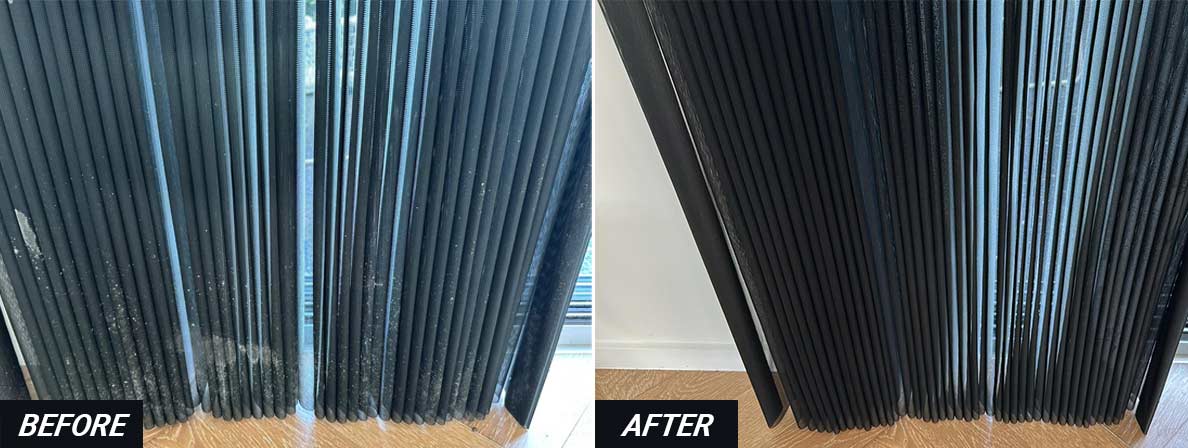
Mould & Mildew Treatment
What it is: Remediation involving anti-fungal agents that kill rhizoids (mould roots) embedded inside the fabric, followed by physical removal of dead spore bodies and protective treatment to retard regrowth.
Who needs it: Homes in coastal or tropical zones, properties with condensation issues, rooms with poor ventilation like bathrooms and laundries, and any curtain showing visible black, green, or white spotting.
Common problems solved: Visible black mould colonies, green mildew on window-side linings, white surface mould on backed curtains, and pervasive damp odours.
Expected results: Complete removal of all visible mould staining. Elimination of the biological root structure. Neutralisation of the associated musty smell. The best chance of preventing rapid recurrence.
Recommended frequency: Immediately upon any visible mould discovery; ongoing monitoring every 3–6 months in high-humidity environments.
Read our mildew removal guide →
Dry Curtain Cleaning
What it is: Immersion in non-aqueous solvents that dissolve oil-based soils and gently carry them away. No water touches the fabric, ensuring zero shrinkage, dye bleed, or texture distortion.
Who needs it: Owners of silk drapes, velvet curtains, heavily embellished or beaded treatments, and formal wool curtains.
Common problems solved: Body oils from handling, airborne cooking oils, dust buildup on silk, and refreshing velvet pile without crushing.
Expected results: Fabric remains dimensionally stable with vibrant colour intact. Silk retains its sheen; velvet retains its soft, directional pile.
Recommended frequency: Every 12–18 months for delicate fabrics in low-soil environments.