
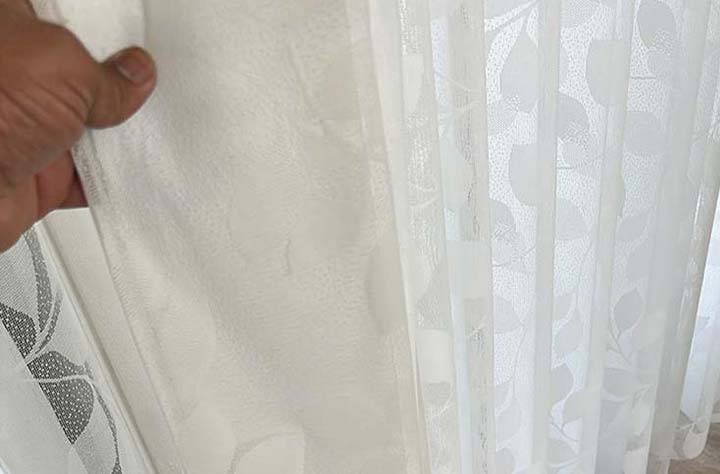
You can clean sheer curtains safely by hand-washing them in cool water with mild detergent, or by using a delicate machine cycle inside a mesh laundry bag. The biggest risk isn't the water or soap—it's agitation, heat, and wringing. Treat the fabric gently, and it will survive washing without snags, shrinkage, or yellowing.
I'll guide you through every method that works, which mistakes cause irreversible damage, and how to handle specific stains and fabric types. By the end, you'll know exactly which approach is safest for your particular curtains.
Why Sheer Curtains Need Special Handling
Sheer curtains are designed to be lightweight and translucent. That means they're made from thin, delicate fibers—usually polyester, nylon, cotton, silk, or a blend—woven loosely enough to let light through.
That loose weave is what makes them vulnerable. Agitation from a standard wash cycle pulls and distorts the threads. Heat from hot water or a dryer shrinks and sets wrinkles permanently. Harsh detergents weaken the already-thin fibers. A single wrong step can turn an expensive panel into something that hangs crookedly or develops runs like pantyhose.
The good news: cleaning them safely takes less effort than replacing them.
Before You Start: Read the Label (Seriously)
Sheer curtains from different manufacturers have different care requirements. A polyester sheer can handle things that would destroy a silk one. The care label is your primary decision-making tool.
If the label says dry clean only, believe it. Silk sheers, some lined sheers, and curtains with attached embellishments fall into this category. The solvents used in dry cleaning dissolve body oils and dust without swelling or distorting delicate fibers the way water can.
If the label says hand wash or machine wash gentle, you have options. But you still need to follow specific steps—"gentle" on your machine may not be gentle enough.
If the label is missing or illegible, assume hand wash in cool water. That's the safest starting point for any sheer fabric.
How to Hand-Wash Sheer Curtains: The Safest Method
Hand-washing gives you complete control over agitation and water temperature. For valuable curtains or anything labeled "hand wash only," this is your best option.
What You'll Need
- A clean bathtub, large basin, or sink
- Mild liquid detergent (wool-safe or delicate formulas are ideal)
- White distilled vinegar (optional, for odor and softening)
- Clean, dry towels
- A flat or hanging drying area away from direct heat
Step-by-Step Hand-Washing Process
Step 1: Remove all hardware.
Take off curtain hooks, rings, clip rings, and any attached weights or chains. Metal hardware can rust and stain the fabric. Plastic can snag threads during washing. Removing them also prevents uneven pulling when the curtains are wet and heavy.
Step 2: Fill the basin with cool or lukewarm water.
Never use hot water on sheers. It sets wrinkles permanently in synthetics and shrinks natural fibers. Aim for water that feels neither warm nor cold to your wrist—around 85°F (30°C) at most.
Step 3: Add a small amount of detergent and mix it in before adding the curtains.
Use about a teaspoon of mild liquid detergent per gallon of water. Sheer fabric doesn't hold much soil, and excess detergent leaves residue that attracts more dust later. Avoid powdered detergents—they may not dissolve fully in cool water and can leave visible specks on dark or colored sheers.
Step 4: Submerge the curtains and gently agitate by hand.
Don't scrub, twist, or wring. Use an up-and-down pressing motion, like you're kneading dough very gently. Let the curtains soak for 10-15 minutes. The detergent needs time to lift oils and dust from the fibers.
Step 5: Drain and refill with clean water.
Rinse until no suds appear. This may take two or three water changes. Leftover detergent makes sheers look dull and feel stiff.
Step 6 (optional): Add vinegar to the final rinse.
A half-cup of white vinegar in the rinse water removes any remaining detergent residue, helps dissolve minerals from hard water, and softens the fabric naturally without coating it like fabric softener would. The vinegar smell disappears completely as the curtains dry.
Step 7: Remove water without wringing.
Lift the curtains out of the water and let them drain for a moment. Then lay them flat on a clean, dry towel. Roll the towel up with the curtain inside and press gently—this transfers water from the curtain to the towel. You can repeat this with a second dry towel if the curtains are very wet.
Real-World Outcome
A homeowner following this method on white polyester sheers that had yellowed over three years reported that the curtains came out noticeably brighter, with no snags or shrinkage. The yellowing was primarily dust and airborne oil residue that dissolved during the soak. They dried in about two hours hung over a shower rod with the bathroom fan running.
How to Machine-Wash Sheer Curtains (When the Label Allows)
If your curtains are labeled machine-washable, you can use a washing machine—but you must modify the process. Don't just toss them in and press start.
The Critical Adjustments You Need to Make
Use a mesh laundry bag. This is non-negotiable. A large mesh bag designed for delicates prevents the fabric from wrapping around the agitator or getting caught under the drum. It also reduces friction from other items. If you're washing multiple panels, use one bag per panel so they don't tangle together.
Select the delicate or hand-wash cycle. This cycle uses low agitation and a slower spin speed. If your machine lets you customize, set the spin to the lowest option. High-speed spinning stretches wet fabric and can pull sheer weaves out of shape.
Use cold water only. Even warm water poses a wrinkle-setting risk for synthetic sheers. Cold water is safe for everything.
Use a small amount of mild liquid detergent. About half of what you'd use for a regular load. Too much detergent in a machine wash creates excess suds that don't rinse out completely in a low-water delicate cycle.
Skip fabric softener entirely. It coats sheer fibers and reduces their light-filtering quality. It can also cause yellowing over time, especially on white or ivory sheers.
Set an extra rinse cycle. This ensures all detergent is removed. Residual detergent attracts dust and makes sheers look foggy instead of clear.
What Goes in the Machine with Your Sheer Curtains
Nothing, ideally. Wash sheers alone. If you must wash them with other items, add only lightweight, non-shedding fabrics that won't cause friction—think nylon slips or polyester blouses. Never wash sheers with towels, jeans, or anything with zippers or hooks.
How to Dry Sheer Curtains Safely
Drying causes more damage than washing. This is where most people ruin their curtains.
Air Drying: The Recommended Method
Hang the curtains while they're still slightly damp, not soaking wet. Use a clean plastic or padded hanger. Wire hangers can rust, and wooden hangers can transfer stain or splinters. Hang them over a shower rod, a drying rack, or back on the curtain rod itself.
The key is ventilation. Direct a fan toward the curtains or open a window. You want them dry within a few hours. Sheer fabric dries quickly because it's thin—that's an advantage. In a room with decent airflow, most sheers dry in one to three hours.
Can you hang them outside?
Yes, but avoid direct midday sun, which can yellow white synthetics and fade colored ones. Early morning or late afternoon sun is gentler. A shaded, breezy spot outdoors dries them fastest.
Machine Drying: Only If Necessary
If you must use a dryer, use the air-only or no-heat setting. Any heat, even low heat, risks shrinkage and wrinkle-setting. Add a couple of dry towels to the load to absorb moisture and reduce drying time, but keep the curtains in their mesh bag.
Remove the curtains while they're still slightly damp and hang them to finish drying. Over-drying in a machine, even without heat, causes static and can abrade the fabric through tumbling.
What Never to Do
Do not wring sheer curtains. Do not twist them to squeeze out water. Do not hang them over a radiator, heating vent, or in direct high sun. Do not put them in a hot dryer. Any of these can cause permanent damage that ironing won't fix.
How to Remove Common Stains from Sheer Curtains
Sheer curtains near windows collect specific types of stains—mildew spots from condensation, yellowing from sun and airborne oils, and occasional food or drink splashes. Each requires a targeted approach.
Mildew Spots
Mildew appears as small black or gray dots, often clustered near window edges where condensation builds. On washable sheers, make a paste of oxygen bleach powder and cool water. Apply it directly to the spots with a soft cloth and let it sit for 15-30 minutes. Then hand-wash or machine-wash as described above.
Oxygen bleach (sodium percarbonate) is color-safe and fiber-safe for most washable fabrics. It's not the same as chlorine bleach. Do not use chlorine bleach on sheers—it weakens the already-thin fibers and can cause yellowing on synthetics.
Yellowing on White Sheers
White sheers yellow over time from a combination of sunlight, heat, and trapped body oils or cooking residue in the air. A long soak in oxygen bleach and cool water (follow package directions for soaking ratios) brightens most sheers significantly.
For stubborn yellowing, add washing soda to the soak. Washing soda raises the water's pH, which helps break down the acidic components of aged oil residue. Use about 1/4 cup per gallon of water. Rinse thoroughly afterward.
A practical note from documented cleaning cases: sheers that have yellowed from years of cigarette smoke exposure are the hardest to restore. You may get them 80% better but not completely white. The tar components bond chemically with synthetic fibers over time.
Grease Marks
Kitchen sheers sometimes develop sticky or darkened areas from aerosolized cooking oil. Apply a tiny amount of undiluted mild liquid dish soap directly to the spot. Dish soap is formulated to break down grease. Gently work it in with your fingertip—don't rub fabric against fabric, which can felt or pill the surface. Let it sit for 10 minutes, then wash normally.
Water Stains and Mineral Deposits
If you have hard water, sheers can develop white, cloudy marks from mineral buildup. The vinegar rinse described in the hand-washing section addresses this. For existing deposits, soak the affected area in a solution of one part white vinegar to three parts cool water for 30 minutes before washing.
What Typically Works in Practice: Fabric-by-Fabric Guidance
Not all sheers are created equal. Your specific fabric type dictates the safest method.
| Fabric Type | Hand Wash | Machine Wash | Dry Clean | Special Notes |
|---|---|---|---|---|
| Polyester | Yes, safest | Yes, in mesh bag, delicate cycle | Rarely needed | Most forgiving fabric. Avoid heat. |
| Nylon | Yes | Yes, with care | Acceptable | Dries fastest. Static-prone. Use vinegar rinse. |
| Cotton | Yes | Yes, but expect shrinkage without care | Acceptable | Shrinks in any heat. Pre-shrunk cotton safer. |
| Silk | Yes, with silk detergent | No | Yes, safest | Water can leave marks. Test in hidden area first. |
| Linen | Yes | No | Yes | Shrinks and wrinkles severely in water. |
| Poly-cotton blend | Yes | Yes, delicate | Rarely needed | More durable than 100% cotton. |
Polyester and Nylon Sheers
These are the most common and the easiest to clean. They resist shrinking, dry quickly, and handle water well. Your main risk is heat, not water. Cold or cool wash, air dry, no ironing unless absolutely necessary—and even then, use the lowest synthetic setting with a pressing cloth.
Cotton Sheers
Cotton sheers have a beautiful natural drape but shrink unpredictably. Expect some shrinkage even in cold water. If the curtains fit exactly to your window now, dry cleaning preserves the dimensions. If you're willing to accept minor shrinkage, hand-wash in cold water and stretch them gently back into shape while damp. Air dry only.
Silk Sheers
Silk is the riskiest. Water can leave permanent marks called water spots, which are actually mineral deposits from the water bonding with the silk proteins. If you hand-wash silk sheers, use distilled water, not tap water, and a detergent specifically formulated for silk. Even then, test on a hem corner first.
Based on textile conservation guidance, silk sheers in good condition should ideally be dry cleaned. The cost is higher, but it's less than replacing ruined silk panels.
Common Mistakes You Should Avoid
Using too much detergent: More soap doesn't mean cleaner—it means residue that attracts more dirt. Sheer curtains need remarkably little detergent.
Washing sheers with other laundry: Even on a delicate cycle, zippers, buttons, and heavier fabrics abrade sheer material. A single snag creates a run that can spread.
Ironing at the wrong temperature: Synthetics melt at temperatures that cotton tolerates. If you must iron, use the lowest setting, no steam on silk, and always use a pressing cloth between the iron and the fabric.
Ignoring the curtain hardware: Rust from a single metal hook or ring can stain an entire panel with orange marks that are nearly impossible to remove from sheers.
Using chlorine bleach on any sheer fabric: It weakens thin fibers to the point where they tear under their own weight when hung. Oxygen bleach is always the safer choice for whitening and stain removal.
Leaving sheers crumpled in a basket after washing: The wrinkles can become permanent, especially in synthetic blends. Hang them or lay them flat immediately after the wash cycle ends.
How Often You Should Clean Sheer Curtains
Sheer curtains collect dust quickly because they're often near open windows. Every one to three months is appropriate for most households. If you live on a busy street, near construction, or in a high-pollen area, monthly cleaning prevents buildup from becoming embedded.
You can extend time between washes by lightly vacuuming sheers with an upholstery brush attachment on low suction. Work from top to bottom, holding the fabric gently taut with your other hand. This removes surface dust before it combines with humidity and turns into the sticky film that's harder to clean.
Signs Your Sheer Curtains Are Beyond Cleaning
Sheers don't last forever. Thin fibers exposed to daily sunlight degrade over time. Here's when to replace rather than clean:
- The fabric has visible runs, like a snag in stockings
- The material feels brittle or cracks when you gently fold it
- Yellowing persists after two thorough cleanings with oxygen bleach
- Holes appear near the top where hooks or rings attach
- The fabric has become unevenly stretched and won't hang straight
Sun damage is cumulative and irreversible. No cleaning product reverses UV degradation of fibers. If your sheers are several years old and sit in direct sun, their lifespan may simply be complete.
Frequently Asked Questions
Can I wash sheer curtains in a top-loading machine with an agitator?
It's riskier. The center agitator in traditional top-loaders creates more friction than the tumbling action of front-loaders or high-efficiency top-loaders without agitators. If you must use an agitator machine, the mesh laundry bag becomes even more essential, and you should reduce the load size to minimize pressure on the bag. Front-loaders are gentler for sheers.
How do I get wrinkles out of sheer curtains without an iron?
Hang them while damp and let gravity do the work. For stubborn wrinkles, hang them in the bathroom while you run a hot shower. The steam relaxes fibers without direct contact. You can also use a handheld steamer held several inches away—steamers are safer for sheers than irons because there's no direct pressure or scorching risk.
Why did my white sheers turn yellow after washing?
This usually happens when detergent residue remains in the fabric and reacts with heat or sunlight. It can also occur if you used hot water on polyester. Rewash using the hand-wash method with vinegar in the rinse, and air dry away from direct sun. If the yellowing is from age and oxidation rather than residue, oxygen bleach soaking helps more.
Can I use Woolite or similar products on sheers?
Yes, products formulated for delicates are appropriate. They're designed to clean without harsh surfactants that can damage thin fibers. However, even mild detergents must be rinsed out completely. A vinegar rinse helps with this.
Is it safe to put sheer curtains in the dryer on the air fluff setting?
The air fluff or no-heat setting is safe for most polyester and nylon sheers. It creates minimal friction and no heat. Still, use a mesh bag and remove them while damp to prevent static buildup and unnecessary fiber abrasion. Cotton, silk, and linen sheers should air dry only.
What's the best way to store sheer curtains between seasons?
Wash them first—storing dirty curtains allows stains to set permanently. Fold them loosely with acid-free tissue paper between the folds. Store in a breathable cotton bag or pillowcase, not plastic, which can trap moisture and cause mildew. Keep them in a cool, dry closet away from direct light.
Key Takeaways
Hand-washing in cool water with minimal detergent is the safest method for all washable sheer curtains. The machine is an option for synthetics only, and only with a mesh bag, cold water, delicate cycle, and no spin.
Heat is your enemy—in water, in the dryer, and from direct sun during drying. Air dry sheers away from heat sources, and let gravity smooth out wrinkles while they're damp.
Fabric type determines everything. Polyester and nylon forgive small mistakes. Cotton shrinks. Silk spots easily. When in doubt, start with the gentlest method and test in an inconspicuous area.
Stains need targeted treatment before washing. Mildew responds to oxygen bleach. Yellowing from age responds to soaking. Grease responds to dish soap. But always treat stains before the full wash so you're not running the entire curtain through multiple cycles.
If your sheers are valuable, irreplaceable, or labeled dry clean only, pay for professional cleaning. The cost is lower than replacement.
Your Next Steps
- Check the care labels on your sheer curtains.
- Decide between hand-washing, machine-washing, or dry cleaning based on fabric type.
- Gather your supplies: mild liquid detergent, a mesh bag if machine-washing, white vinegar, and clean towels.
- Remove all hooks, rings, and hardware before you begin.
- Wash using the method that matches your fabric.
- Air dry away from heat and direct sun.
- Rehang while slightly damp for the smoothest finish.
One final note: if you have hard water at home, add vinegar to every final rinse whether you're hand-washing or machine-washing. The mineral content in hard water bonds with detergent to form a dulling film that's especially visible on sheer fabric. You'll notice the difference in how clearly light passes through the curtains after they're rehung.