
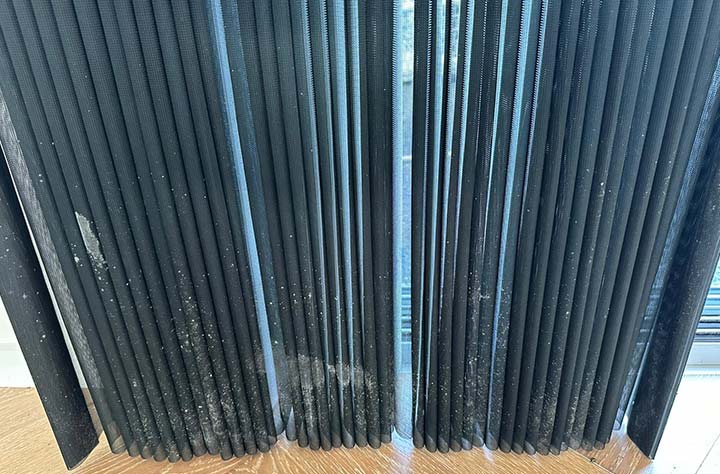
The best way to clean curtains depends entirely on the fabric type, construction, and how soiled they are. For most machine-washable curtains, the safest effective method is a cold or warm delicate cycle with mild detergent, inside a mesh laundry bag, followed by air drying or low-heat machine drying. For dry-clean-only or delicate fabrics, professional cleaning is the best choice.
There is no single method that works for every curtain in every home. But there is a decision-making framework you can follow to get it right every time. I'll walk you through that framework now, including exactly how to evaluate your own curtains, which methods work for which situations, and the mistakes that cause the most damage.
Start Here: What Type of Curtains Do You Have?
Before you touch water or cleaning products, you need to answer three questions. These determine everything that follows.
What is the fabric?
Cotton, polyester, linen, silk, velvet, and blends all respond differently to water, heat, and agitation. A polyester sheer can handle a machine wash. A silk panel cannot handle water at all without risk of permanent water spotting.
What does the care label say?
This is not a suggestion. It's the manufacturer's legal declaration of what the product can survive. If it says dry clean only, believe it. The fabric or its lining may shrink, discolor, or delaminate if washed.
Is there a lining?
Many curtains have a separate lining fabric attached. The lining may have entirely different care requirements than the face fabric. Thermal-backed or blackout linings often cannot be washed. If you wash a curtain with a non-washable lining, the lining can separate, bubble, or disintegrate.
Once you have these answers, you can match your curtains to the right method.
The Complete Method Selection Framework
Here is how you should decide which cleaning approach to use.
| Curtain Type | Best Method | Can Machine Wash? | Can Hand Wash? | Water Temperature | Dryer Safe? |
|---|---|---|---|---|---|
| Cotton (unlined) | Machine wash gentle | Yes | Yes | Warm | Low heat |
| Polyester (unlined) | Machine wash gentle | Yes | Yes | Cool or warm | Low or no heat |
| Cotton-poly blend | Machine wash gentle | Yes | Yes | Warm | Low heat |
| Linen (unlined) | Dry clean or careful hand wash | No | With extreme care | Cold | Never |
| Silk (any) | Dry clean | No | Risk of water spots | Not applicable | Never |
| Velvet | Dry clean | No | No | Not applicable | Never |
| Sheer synthetics | Hand wash | Yes, in mesh bag only | Yes | Cool | No heat only |
| Thermal/blackout | Dry clean or spot clean | Usually no | Usually no | Check label | Rarely |
| Lined curtains (sewn-in) | Dry clean | Depends on both fabrics | Depends on both fabrics | Check both labels | Rarely |
| Curtains with embellishments | Dry clean | No | No | Not applicable | Never |
This table gives you a starting point. Now let me walk through each method in detail, including exactly what to do and what to avoid.
Machine Washing: The Most Convenient Method for Washable Curtains
Machine washing is appropriate for cotton, polyester, and most unlined synthetic curtains. It saves time and effort, but only if you modify your machine's default settings.
How to Machine-Wash Curtains Safely
Remove all hardware first: Curtain hooks, rings, clip rings, and weights must come off before washing. Metal rusts and stains. Plastic snags. Weights pull unevenly on wet fabric and can distort the weave.
Use a mesh laundry bag: This is not optional for sheers or delicate weaves. The bag prevents the fabric from wrapping around the agitator or getting pinched under the drum. For large panels, use one bag per panel so they don't twist together.
Select the delicate or gentle cycle: This setting reduces agitation speed and uses a slower spin. High-speed spinning stretches wet fabric, especially heavy curtains. If your machine allows spin speed adjustment, choose the lowest setting.
Use cold or warm water, not hot: Hot water sets wrinkles permanently in synthetics and shrinks natural fibers. Cold water cleans effectively for most household dust and light soiling. Warm water helps dissolve body oils but must be safe for the specific fabric.
Use half the normal detergent amount: Curtains don't accumulate the heavy soiling that clothing does. Excess detergent leaves residue that attracts dust and makes curtains look dull. Liquid detergent is preferable to powder, which may not dissolve completely in cold water.
Add an extra rinse cycle: This ensures all detergent washes out. Residual detergent is a magnet for airborne dust and can cause yellowing over time, especially on white or light-colored curtains.
Remove promptly when the cycle ends: Letting wet curtains sit in the machine invites mildew. Transfer them to the dryer or hanging setup immediately.
A Realistic Example of What to Expect
Consider unlined cotton curtains in a living room, washed after a year of exposure to dust and occasional cooking vapor. A warm delicate cycle with half the detergent and an extra rinse removes the accumulated film. The curtains come out looking brighter and feeling softer. They hang with fewer wrinkles if removed from the dryer while slightly damp.
The same curtains washed on a normal cycle with hot water and a full dose of detergent would likely shrink by several inches, emerge with deep-set wrinkles, and feel stiff from detergent residue. The method matters as much as the intention to clean.
Hand Washing: The Safest Method for Valuable or Delicate Washable Curtains
Hand washing gives you complete control over water temperature, agitation, and handling. It takes more time and physical effort, but it eliminates the mechanical risks of a washing machine.
When Hand Washing Is Your Best Option
Choose hand washing when the curtains are labeled hand-wash only, or when they are machine-washable but you want maximum control. Sheer curtains, loosely woven fabrics, and anything with a tendency to snag benefit from hand washing. Curtains that are valuable, antique, or irreplaceable should always be hand washed rather than machine washed, even if the label technically permits machine washing.
Step-by-Step Hand Washing Process
Fill a clean bathtub or large basin with cool or lukewarm water. The container must be clean. Residual bath products, cleaning chemicals, or dirt will transfer to your curtains.
Add a small amount of mild liquid detergent and swish it around to dissolve it before adding the curtains. Use about a teaspoon per gallon of water. Sheer fabrics need even less.
Submerge the curtains and press them gently to saturate every part. Use an up-and-down pressing motion rather than scrubbing or twisting. Let them soak for ten to fifteen minutes. The soak time allows the water and detergent to lift dust and oils from the fibers without mechanical agitation.
Drain the water and refill with clean water for rinsing. You will need two or three water changes until no suds appear. Leftover detergent makes curtains stiff and dull.
Add half a cup of white vinegar to the final rinse if you have hard water or want to remove any remaining detergent residue. The vinegar smell disappears completely as the curtains dry. This step also softens the fabric naturally without the waxy coating fabric softener leaves behind.
Remove water by pressing, never wringing. Lift the curtains, let them drain for a moment, then lay them flat on a clean dry towel. Roll the towel with the curtain inside and press gently. Repeat with a second dry towel if the fabric is still dripping.
Hang or lay flat to dry away from direct heat. A drying rack, shower rod, or outdoor line in shade all work. Direct a fan at the curtains to speed up drying if needed.
Dry Cleaning: When Professional Care Is the Only Safe Option
Some curtains cannot handle water. The fibers swell, shrink, or develop permanent marks when wet. Dry cleaning uses chemical solvents instead of water to dissolve oils and carry away dirt. The solvents evaporate quickly and do not cause fiber swelling.
When You Must Dry Clean
Silk curtains develop water spots from mineral deposits bonding with silk proteins. Velvet loses its pile and develops permanent crush marks when wet. Linen shrinks dramatically and wrinkles so severely that no amount of ironing restores the original hang. Curtains with structured headings, sewn-in linings, or attached embellishments can delaminate or come apart in water.
The cost of dry cleaning is higher than home washing, but it's significantly lower than replacing curtains that were damaged by water. For expensive or irreplaceable curtains, dry cleaning is not an indulgence. It's the only method that preserves the fabric.
What to Tell Your Dry Cleaner
Do not just drop off the curtains with a general cleaning request. Tell the cleaner specifically what you need addressed. If there are stains, point them out and explain what caused them if you know. If there are odors, mention them. If the curtains have sun damage, the cleaner needs to know so they can use a gentler solvent cycle.
Ask whether the cleaner uses perchloroethylene or a hydrocarbon-based solvent. Hydrocarbon solvents are less aggressive and are often preferred for delicate or aged fabrics. Either works when the cleaner selects the appropriate cycle.
Dry cleaning removes dust, body oils, and most stains. It kills mildew and bacteria through solvent action and the heat of the pressing process. It does not remove embedded smoke damage as effectively as specialized wet cleaning, so mention smoke exposure if relevant.
Spot Cleaning: For Isolated Stains Between Full Washes
You don't need to clean an entire curtain panel for one small stain. Spot cleaning targets the affected area only and can extend the time between full cleanings.
How to Spot Clean Without Leaving a Ring
Test any cleaning solution on an inconspicuous area first. The bottom hem or a back corner works well. Apply a small amount, wait a minute, and blot with a white cloth. If any color transfers to the cloth, do not use that solution on the visible areas.
Use the mildest effective cleaner for the stain type. A small amount of mild liquid detergent mixed with cool water handles most household stains. For grease spots, a tiny drop of undiluted dish soap applied directly works better. For food or beverage stains, cool water alone often lifts fresh spills.
Apply the solution to a clean white cloth, not directly to the curtain. Dab the stain. Do not rub. Rubbing spreads the stain and can abrade the fabric surface. Work from the outside of the stain inward to prevent spreading.
Blot with a dry cloth to absorb moisture and lifted stain. Alternate between the damp cleaning cloth and the dry blotting cloth until no more stain transfers.
Dry the spot quickly with a fan or by patting with a dry towel. Leaving the area damp creates a water ring as dissolved soil migrates to the edge of the wet area and concentrates there.
For stains that don't respond to these steps, consult a dry cleaner rather than trying progressively harsher products. The wrong chemical can set a stain permanently or damage the dye.
Steam Cleaning: A Middle Ground for Maintenance
Steam cleaning occupies the space between washing and dry cleaning. It freshens curtains, relaxes wrinkles, and kills surface bacteria and dust mites without immersion in water.
When Steam Cleaning Makes Sense
Steam works well for curtains that are not heavily soiled but need refreshing. It's also appropriate for curtains that cannot be washed but don't yet need the expense of dry cleaning. Heavy drapes that are difficult to take down and rehang benefit from in-place steam cleaning.
A handheld fabric steamer delivers steam at temperatures above 200°F (93°C), which kills dust mites and most surface bacteria. The steam also relaxes fibers, releasing wrinkles without the crushing pressure of an iron.
Limitations You Should Know
Steam cleaning does not remove embedded oils or heavy soiling. It is a surface treatment, not a deep clean. The steam condenses on the fabric surface and does not penetrate deeply enough to carry away accumulated body oils or airborne grease. For truly dirty curtains, steaming is a supplement to washing or dry cleaning, not a replacement.
Steam can also cause shrinkage or water spotting on fabrics that are not colorfast or heat-tolerant. Test in an inconspicuous area first.
How to Dry Curtains Without Damaging Them
Drying causes more curtain damage than washing. This is where most people ruin otherwise cleanable curtains.
Air Drying: The Recommended Default
Hang curtains while they are still slightly damp, not soaking wet. Use the curtain rod itself, a shower rod, or a drying rack. The weight of the damp fabric pulls out wrinkles as it dries. This is why curtains often look better after air drying than after machine drying.
Ensure good airflow. A fan pointed at the curtains or an open window reduces drying time dramatically. Sheer and lightweight curtains dry in one to three hours with airflow. Heavy drapes may take overnight.
Avoid direct high sun for extended periods. Ultraviolet light fades dyes and can yellow white synthetics over time. Outdoor drying in shade or indirect light is ideal.
Machine Drying: When and How
Use the lowest heat setting that is safe for the fabric. No heat at all is safest for synthetics. Add a couple of dry towels to the load to absorb moisture and reduce drying time, but place delicate curtains in a mesh bag first.
Remove curtains while they are still slightly damp. Over-drying in a machine causes static, sets wrinkles, and abrades the fabric surface through prolonged tumbling. Hang them to finish drying.
Never machine dry curtains that contain linen, silk, velvet, or any fabric you are unsure about. The risk is not worth the time saved.
How Often You Should Clean Your Curtains
Curtains accumulate dust, airborne oils, cooking residue, pet dander, and pollen continuously. How often you clean them depends on where they hang and who lives in your home.
Every three to six months is appropriate for most living areas. Curtains in bedrooms, living rooms, and dining rooms fall into this category.
Every one to three months for kitchens, where aerosolized cooking oil creates a sticky film that attracts and holds dust. This film becomes rancid over time and is harder to remove the longer it sits.
Every two to four months for homes with pets, smokers, or allergy sufferers. Dander, smoke residue, and pollen embed in curtain fibers and get recirculated into room air every time the curtains are disturbed.
Every six to twelve months for curtains in rarely used rooms. Guest bedrooms and formal living rooms accumulate dust more slowly.
Between full cleanings, vacuum curtains monthly with an upholstery brush attachment on low suction. Work from top to bottom, holding the fabric gently taut with your free hand. This removes surface dust before it combines with humidity and becomes sticky or embedded.
Common Mistakes That Damage Curtains
Using too much detergent: The thinking is that more soap equals cleaner. In reality, excess detergent leaves residue that attracts more dust and can cause yellowing, especially on white fabrics. Curtains need remarkably little soap.
Washing all curtains together regardless of fabric: A single load might contain cotton, polyester, and a blend. The settings that work for one may ruin another. Sort by fabric type and care requirements.
Ignoring the care label: The manufacturer tested the fabric. They know at what temperature it shrinks and what chemicals damage the dye. The label is not a suggestion.
Using chlorine bleach on unknown fabrics: Chlorine bleach weakens fibers, especially thin or synthetic ones. It can cause yellowing on polyester and dissolve silk entirely. Oxygen bleach is safer for nearly all fabrics.
Leaving wet curtains in the machine: Mildew establishes itself within hours. If you cannot dry the curtains immediately after the wash cycle ends, do not start the wash.
Ironing at the wrong temperature: Synthetics melt at temperatures that cotton tolerates. If you must iron, use the lowest effective setting, no steam on silk, and always use a pressing cloth between the iron and the fabric.
Washing curtains with the hardware attached: A single metal hook can rust and stain an entire panel. A single loose ring can tear fabric during the spin cycle.
Assuming all linings are washable: Blackout and thermal linings often contain coatings that dissolve in water or separate from the face fabric during washing. Check both layers before deciding on a method.
How to Choose Curtains That Are Easier to Clean
If you are buying new curtains and cleaning ease matters to you, make choices that reduce future effort.
Choose machine-washable fabrics. Polyester, cotton, and cotton-poly blends labeled machine washable will serve you best. Avoid silk, velvet, and linen unless you are willing to pay for dry cleaning.
Choose unlined curtains where possible. Linings double the complexity of cleaning because you must accommodate two different fabrics. If you need light control or insulation, look for curtains with removable linings or separate liner panels.
Avoid heavy embellishments. Beading, sequins, glued-on trim, and elaborate headings all complicate or prevent washing. Simple construction cleans more easily.
Pre-wash cotton curtains before hemming if you are making your own. Cotton shrinks on first contact with water. Pre-washing and then hemming to size means the finished curtains won't shrink further in future washes.
Cost Comparison of Curtain Cleaning Methods
| Method | Typical Cost | Best For | Limitations |
|---|---|---|---|
| Machine washing at home | Under $2 per load (detergent, water, energy) | Unlined cotton, polyester, blends | Not for dry-clean-only fabrics |
| Hand washing at home | Under $2 per wash | Sheers, delicates, valuable washables | Labor-intensive |
| Dry cleaning | $15-$40 per panel | Silk, velvet, linen, lined, structured | Ongoing cost; some chemicals have odor |
| Steam cleaning at home | Equipment cost $30-$100 upfront | Maintenance between deep cleans | Surface cleaning only |
| Professional on-site cleaning | $75-$200+ per room | Heavy drapes that can't be removed | Expensive; variable quality |
Frequently Asked Questions
Can I wash dry-clean-only curtains?
Some yes, some no. The label exists for a reason. Fabrics like silk and velvet genuinely cannot handle water without damage. Other fabrics labeled dry-clean may be washable if they are sturdy and unlined, but you accept the risk. Test an inconspicuous corner first. If the fabric feels different, shrinks, or the color runs, stop. When in doubt, follow the label.
What temperature water should I use for washing curtains?
Cold or warm, never hot, unless the fabric is white cotton and you are intentionally trying to sanitize or whiten. Cold water is safest for everything and cleans adequately for most curtain soiling. Warm water helps with oily residues but increases shrinkage risk on natural fibers.
Is it better to wash curtains or dry clean them?
It depends entirely on the fabric. For machine-washable synthetics and cottons, washing at home is cheaper, more convenient, and equally effective. For silks, velvets, lined drapes, and structured curtains, dry cleaning is the only safe method. The question is not which is better in general. It's which is better for your specific curtains.
How do I get wrinkles out of curtains without an iron?
Hang them while damp and let gravity do the work. For stubborn wrinkles, hang the curtains in the bathroom and run a hot shower. The steam relaxes the fibers. A handheld garment steamer also works and is safer than an iron because there is no direct pressure or scorching risk.
Can I put curtains in the dryer?
Machine-washable cotton and polyester curtains can go in the dryer on low or no heat. Remove them while still slightly damp to prevent wrinkles and static. Linen, silk, velvet, and anything labeled dry-clean should never go in the dryer. Sheer synthetics can go in on the air-only setting inside a mesh bag.
Why do my curtains smell worse after washing?
This usually means your washing machine has mildew contamination that transferred to the curtains, or the curtains dried too slowly and mildew grew. Clean your machine by running an empty hot cycle with vinegar. Rewash the curtains with vinegar in the wash water and dry them faster this time—use a fan or direct sunlight.
How do I clean curtains that are too large for my washing machine?
Use a bathtub for hand washing. If the curtains are too large even for that, take them to a laundromat with oversized front-loading machines. These machines handle large loads without the center agitator that can damage curtains. Alternatively, have them dry cleaned.
Can I clean curtains without taking them down?
You can vacuum them with an upholstery attachment and steam clean them in place for maintenance. You cannot wash them properly or remove deep soiling without taking them down. Gravity pulls water and cleaning solutions downward, which can cause uneven cleaning and water marks. Taking curtains down also lets you inspect both sides and the lining for damage or hidden mildew.
How do I know if the curtain lining is washable?
Check for a separate care label on the lining. If there is none, assume it is not washable unless you can identify the material. Foam-backed or rubberized thermal linings are almost never washable. Cotton sateen linings often are. When in doubt, test a small hidden area with water and watch for changes in texture, shrinkage, or separation.
What's the best way to store curtains between seasons?
Wash or dry clean them first. Storing dirty curtains sets stains and odors permanently. Fold them loosely with acid-free tissue paper between folds. Store in a breathable cotton bag or pillowcase, never in plastic, which traps moisture and causes mildew. Keep in a cool, dry closet.
Key Takeaways
The best cleaning method for your curtains depends on the fabric, the lining, and the care label. There is no universal answer, but there is a reliable framework: check the label, identify the fabric, and match the method to the material.
Machine washing works well for unlined cotton, polyester, and blends when you use cold or warm water, gentle cycles, minimal detergent, and prompt drying. Hand washing is safer for sheers, delicates, and anything valuable. Dry cleaning is mandatory for silk, velvet, linen, lined drapes, and structured curtains.
Drying is where damage most often occurs. Air dry when possible. Use low or no heat if machine drying. Remove curtains while slightly damp to prevent wrinkles and static.
Between full cleanings, vacuum curtains monthly and address stains immediately with spot cleaning. Clean curtains every three to six months in most rooms, more often in kitchens and homes with pets or smokers.
If your curtains are expensive, irreplaceable, or you are uncertain about the fabric, professional dry cleaning costs less than replacement.
Your Next Steps
- Take down one curtain panel and examine the care label.
- Identify the fabric type and whether there is a lining.
- Use the decision framework in this guide to select the appropriate method.
- If machine washing, gather a mesh laundry bag and mild liquid detergent.
- If hand washing, ensure your tub or basin is clean and you have enough space.
- If dry cleaning, call ahead and explain what you need.
- Clean and dry completely before rehanging.
- Set a reminder to clean your curtains again in three to six months.
One final consideration: if you live in a hard water area, add white vinegar to every final rinse regardless of your washing method. The mineral content in hard water bonds with detergent to create a dulling film that is especially visible on dark or light-colored curtains.
You will notice the difference in how the fabric looks and feels after it dries. For the same reason, if your home uses well water with high iron content, consider having curtains dry cleaned rather than washed at home. Iron in water can leave rust-colored stains on fabric that are nearly impossible to remove once set by heat or time.