
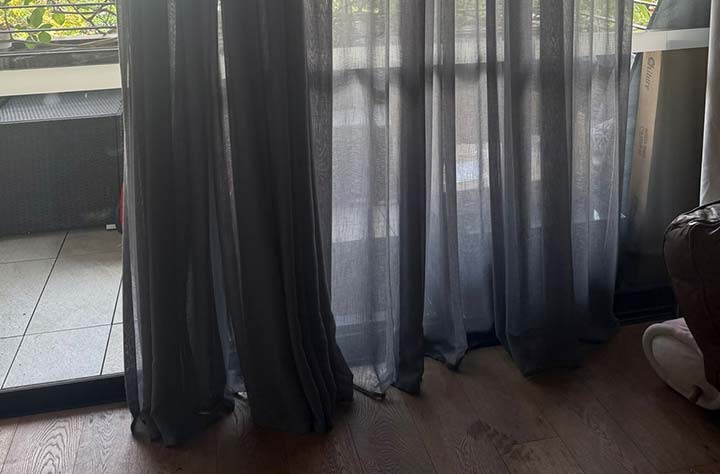
The fastest way to remove mildew smell from curtains is to kill the mildew itself, not just mask the odor. Wash the curtains with white vinegar in the hottest water the fabric can tolerate, then follow with an oxygen bleach soak if the smell persists. Dry them completely and quickly. Anything less is temporary.
This problem is fixable. But you need to understand what you're fighting, which method matches your curtain type, and how to stop it from coming back. I'll walk you through every step.
Why Mildew Smell Is a Serious Problem, Not Just a Nuisance
That musty smell is a warning sign. It means mildew spores are actively growing on your curtains. Mildew is a surface fungus that feeds on the organic matter trapped in fabric fibers—dust, skin cells, body oils, and even the sizing or starch applied during manufacturing.
You can't just cover this up with fabric spray. The spores remain. Every time humidity rises, the smell intensifies because the mildew reactivates and releases more volatile organic compounds into your room. For household members with allergies, asthma, or respiratory conditions, this isn't just unpleasant. It can trigger real symptoms.
The odor compounds produced by mildew—primarily geosmin and 2-methylisoborneol—are detectable to the human nose at incredibly low concentrations. That's why even a small amount of mildew smells so strong. Your nose is doing its job. Listen to it.
What Caused the Mildew in the First Place
Understanding the cause helps you prevent recurrence. Mildew on curtains almost always traces back to one of these scenarios.
Slow drying after washing: This is the number one cause. Curtains are dense, often lined, and hold enormous amounts of water. If they don't dry within four to six hours, airborne mildew spores—always present in every home—find a perfect breeding ground. The damp fabric provides the moisture. The room air provides the spores. Time does the rest.
Window condensation: Curtains that touch cold window glass collect condensation, especially in winter or in humid climates. The fabric stays damp where it contacts the glass, often unnoticed because the outer side faces the window. Over weeks, mildew establishes itself exactly along that damp edge.
High room humidity: Bathrooms, kitchens, and basements routinely exceed 60% relative humidity. Mildew thrives above this threshold. Curtains in these rooms absorb moisture from the air continuously, not just from direct water contact.
Storing curtains while damp: Putting away curtains that feel dry to the touch but still hold residual moisture traps that moisture in a dark, still environment. Mildew blooms within days.
Before You Start: What You Need to Check
Not every curtain can handle the same treatment. Check three things before you begin.
The care label: Look for the water temperature limit. It's usually stated as a symbol—one dot for cold, two for warm, three for hot. You need at least warm water for vinegar to penetrate effectively. Hot water works better. If your curtains are cold-water only or dry-clean only, skip to the alternative methods section at the end of this guide.
The fabric type: Cotton and polyester tolerate hot water and vinegar. Linen tolerates warm water but shrinks. Silk cannot handle vinegar at full strength. Acetate and rayon can dissolve or weaken. Identify what you have before proceeding.
The lining: Many curtains have a separate lining fabric. The lining may have different care requirements than the face fabric. Thermal-backed or foam-backed curtains degrade with hot water and aggressive treatment. If the lining is separating, bubbling, or flaking, the curtains may not survive washing at all.
Step-by-Step: The Vinegar Wash That Kills Mildew
White distilled vinegar at 5% acidity kills the majority of mildew species found on household fabrics. It works by disrupting the fungal cell membrane through acetic acid. It also dissolves the alkaline residues that can trap odors in fabric.
Step 1: Remove and Shake Out the Curtains
Take the curtains down outdoors if possible. Shake them vigorously to dislodge loose spores and dust. Do this away from your face and away from open windows. You don't want to spread spores back into your house.
Wear a dust mask if you're sensitive to mold. The shaking releases a cloud of spores you don't want to inhale.
Step 2: Pre-Soak in Vinegar Solution
Fill a bathtub or large basin with the hottest water the fabric can safely handle. For cotton and polyester, that's typically hot tap water around 130°F (54°C). For blends and more delicate synthetics, use warm water.
Add one cup of white distilled vinegar per gallon of water. Mix it in. Then submerge the curtains completely. Use your hands to push the fabric under and ensure every part is saturated.
Let the curtains soak for at least one hour. Four hours is better for heavy mildew. Overnight is fine for sturdy fabrics. The vinegar needs contact time to penetrate the fibers where mildew has taken hold.
Step 3: The Wash Cycle
Transfer the curtains to your washing machine. Do not drain and refill the tub for washing—the vinegar solution has already done the heavy lifting. Add a small amount of mild detergent, about half your normal amount. Too much detergent leaves residue that can trap odors later.
Set the machine to the hottest water setting the fabric can handle, the longest cycle available, and an extra rinse if your machine has that option.
For front-loading machines, use the heavy-duty or sanitize cycle if available. For top-loaders with an agitator, place the curtains in a mesh laundry bag to prevent twisting and damage.
Step 4: The Critical Check
When the wash cycle finishes, smell the wet curtains immediately. They should smell like nothing or have only a faint, clean vinegar scent. If you still detect mustiness, do not dry them. Drying will set the remaining mildew smell and make it harder to remove later.
If the smell persists, proceed to the oxygen bleach method in the next section before drying.
Step 5: Dry Completely and Quickly
Speed matters more than heat. Mildew spores can germinate in as little as four to six hours on damp fabric.
Machine drying on the appropriate heat setting is fastest. Use medium heat for cotton, low heat for synthetics. Add two clean, dry towels to absorb moisture and reduce drying time. Do not overcrowd the dryer.
For air drying, hang the curtains outside in direct sunlight. Ultraviolet radiation is a powerful natural antimicrobial. Even on a cool day, sun exposure helps kill remaining spores. If outdoor drying isn't possible, hang indoors with a fan pointed directly at the fabric and keep windows open for cross-ventilation.
The curtains must feel bone-dry before you rehang them. Any remaining dampness, especially along seams and hems where fabric is thickest, will restart the mildew cycle.
When Vinegar Isn't Enough: The Oxygen Bleach Method
Some mildew species are more resistant to acetic acid than others. If the smell survives the vinegar treatment, you need an oxidizer.
Oxygen bleach—sodium percarbonate—releases hydrogen peroxide when dissolved in water. This oxidation reaction destroys the cellular structure of mildew, including spores that vinegar may have left intact. It is color-safe for most fabrics and significantly gentler than chlorine bleach.
How to Use Oxygen Bleach on Curtains
Fill your tub or basin with the hottest water the fabric can handle. Add the oxygen bleach product according to the package directions for a soak. Most brands recommend one scoop per gallon of water.
Stir until the powder dissolves completely. Undissolved granules can leave white spots on dark fabrics.
Submerge the curtains and let them soak for at least four hours. Overnight is better—eight hours gives the oxidation reaction time to work through thick or lined fabric.
After soaking, drain the water and wash the curtains in the machine with regular detergent and an extra rinse. Do not add vinegar to this wash. Vinegar is acidic, and combining it with oxygen bleach reduces its effectiveness. Use them in separate steps, not together.
Check the smell after washing. If it's gone, dry as described above. If it's reduced but not eliminated, you can repeat the oxygen bleach soak. Some heavily contaminated curtains need two treatments.
What If Dry Cleaning Is Your Only Option?
Curtains labeled dry-clean-only—silk, wool, lined drapes with structured headings, antique fabrics—still need mildew treatment. The dry cleaning process uses solvents that kill mildew through a different mechanism than water-based methods.
Take the curtains to a professional dry cleaner and tell them specifically that there is mildew present. Do not just drop them off with a general cleaning request. The cleaner needs to know so they can pre-treat the affected areas and possibly extend the cleaning cycle.
Ask if they use perchloroethylene or a hydrocarbon-based solvent. Hydrocarbon solvents are less aggressive but may require longer exposure to kill mildew effectively. Either works when the cleaner knows what they're treating.
The cost is higher than home treatment, but replacing dry-clean-only curtains damaged by a DIY attempt is significantly more expensive.
How to Handle Curtains That Cannot Be Washed at All
Some curtains cannot withstand immersion in water. Heavy thermal curtains with foam backing, glued-on embellishments, or fabrics like acetate can dissolve, shrink, or delaminate if submerged.
In these cases, you have limited but viable options.
Steam cleaning: A handheld fabric steamer delivers heat above 200°F (93°C), which kills most mildew on contact. Work in small sections, holding the steamer head close to the fabric and moving slowly. The fabric should become damp but not soaked. Follow immediately with a fan to dry the surface quickly.
Steam cleaning alone may not eliminate deeply embedded mildew. It's a surface treatment. But for non-washable curtains, it's often the only DIY option.
Vodka spray: Unflavored vodka in a spray bottle can help reduce mildew odor. Vodka is approximately 40% ethanol, which has antimicrobial properties. Lightly mist the affected areas until damp, not soaked, and allow to air dry in sunlight or with strong ventilation. The ethanol evaporates and takes some odor compounds with it.
This method is less effective than washing but safer for non-washable fabrics. It may require multiple applications.
Professional dry cleaning remains the most thorough option for expensive or irreplaceable curtains.
What Doesn't Work (Despite What You've Heard)
Febreze and similar fabric sprays: These mask odors with fragrance and contain cyclodextrins that temporarily trap some odor molecules. They do not kill mildew. The smell returns within days as the fragrance fades and the mildew continues producing odor compounds.
Baking soda sprinkled on dry curtains: Baking soda absorbs some odors from the air around it, but it cannot reach mildew embedded in fibers. By the time you vacuum it off, most of the odor remains. Baking soda is useful for maintenance between washes, not for treating an active mildew problem.
Hot water alone: Heat helps, but water without an antimicrobial agent doesn't kill mildew spores effectively at washing machine temperatures. You need vinegar, oxygen bleach, or another biocide.
Essential oils: Tea tree oil and other essential oils do have some antimicrobial properties in laboratory settings. But at the concentrations you can safely use on fabric without staining or leaving residue, they aren't reliable for killing established mildew. They add fragrance, which masks the problem rather than solving it.
Ignoring it and hoping it goes away: Mildew does not die off on its own. In dry conditions, it goes dormant. When humidity rises, it reactivates. The spores can remain viable for years.
How to Prevent Mildew Smell from Returning
Once you've eliminated the mildew, make sure it stays gone.
Dry curtains completely after every wash: This is the single most effective prevention measure. If your current drying setup can't get curtains dry within four to six hours, change the setup. Use a fan. Use a dehumidifier. Use a dryer. Whatever it takes.
Address window condensation: If your curtains touch cold glass and collect moisture, install a dehumidifier in the room, improve ventilation, or switch to curtains that hang away from the glass. Thermal curtains with a vapor barrier backing can also reduce condensation transfer.
Control room humidity: Keep indoor humidity below 60%, ideally between 30% and 50%. A basic hygrometer costs less than ten dollars and tells you exactly what you're dealing with. In bathrooms and kitchens, run exhaust fans during and after showering or cooking.
Wash curtains every three to six months. Regular washing prevents the buildup of the organic matter mildew feeds on. Curtains in high-humidity rooms may need more frequent washing.
Clean your washing machine monthly: A machine contaminated with mildew transfers spores to everything you wash. Run an empty hot cycle with two cups of vinegar or a commercial machine cleaner. Wipe the door gasket after every wash if you have a front-loader. Leave the door open between uses.
Store curtains only when completely dry: If you rotate curtains seasonally, ensure they are completely dry before folding and storing. Use breathable cotton storage bags, not plastic. Store in a dry area, not a basement or attic that experiences humidity swings.
When Replacement Is the Smarter Choice
There are situations where cleaning isn't worth the effort or won't succeed.
Curtains that have been contaminated by prolonged flooding often have mildew penetration into the lining and interlining that washing cannot reach. The smell may improve but never fully disappear.
Thermal-backed curtains whose foam or rubberized backing has begun to degrade chemically often hold odors permanently. The breakdown products of the backing material themselves smell bad, and washing accelerates the deterioration.
Curtains with visible mildew staining that persists after two thorough treatments with vinegar and oxygen bleach likely have permanent staining within the fiber structure. The smell and the stain are both fixed at that point.
If you've followed all the steps in this guide twice without success, the mildew has likely penetrated beyond what home treatment can address. Factor in the cost of your time, products, and water against the cost of replacement curtains.
Comparison of Mildew Odor Removal Methods
| Method | Effectiveness | Safe for Delicates | Cost | Time Required | Odor Prevention |
|---|---|---|---|---|---|
| Vinegar soak + wash | High | Most fabrics | $ | 2-6 hours | Good |
| Oxygen bleach soak + wash | Very High | Colorfast fabrics | $$ | 6-12 hours | Excellent |
| Steam cleaning | Medium | Most fabrics | $$$ | 30-60 minutes | Moderate |
| Vodka spray | Low-Medium | All fabrics | $ | 15 minutes + drying | Low |
| Dry cleaning | High | All fabrics | $$$$ | 2-3 days | Good |
| Fabric sprays (Febreze) | None (masks only) | All | $ | 2 minutes | None |
| Sunlight alone | Medium | All | Free | 4-8 hours | Low |
Frequently Asked Questions
Will the vinegar smell stay in my curtains?
No. The vinegar smell evaporates completely as the curtains dry. If you detect any vinegar odor after drying, the curtains are still damp. Continue drying.
Can I mix vinegar and bleach to make it stronger?
Never. Mixing vinegar (an acid) with chlorine bleach (sodium hypochlorite) releases chlorine gas, which is toxic and can cause serious respiratory injury. Even mixing vinegar with oxygen bleach reduces its effectiveness because the acid neutralizes the alkaline conditions oxygen bleach needs to work. Use them separately.
Why does the mildew smell worse when the curtains are wet?
Water rehydrates dormant mildew spores and triggers them to release odor compounds. This is actually a good sign during the cleaning process—it means the water is reaching the spores. The smell should disappear after the antimicrobial treatment and drying.
Can I use chlorine bleach on white curtains?
Only if the care label explicitly says chlorine bleach is safe. Chlorine bleach weakens fibers, especially thin or delicate ones. It also reacts with some synthetic fabrics and causes yellowing rather than whitening. Oxygen bleach is safer for nearly all fabrics and still effective.
How can I tell if the smell is from the curtains or the wall behind them?
Remove the curtains and smell the wall, window frame, and surrounding area. If the wall smells musty, you have a building moisture problem—possibly a leak, condensation inside the wall cavity, or rising damp. Cleaning the curtains won't solve this. You need to address the moisture source first.
Does sunlight really kill mildew?
Yes. Ultraviolet radiation damages the DNA and cellular structure of mildew and mold. Direct sunlight for several hours significantly reduces viable spores on fabric surfaces. It's not 100% effective on thick or lined curtains where light can't penetrate, but it's a valuable additional step after washing.
Why did my curtains smell fine after washing but musty again after a week?
Either the mildew was not fully killed during washing, or your room humidity is high enough to reactivate dormant spores that remained. Re-wash using the oxygen bleach method for a more thorough kill, and address the room's humidity level before rehanging.
Is the mildew smell harmful to my health?
For most people, mildew odor is unpleasant but not dangerous. However, exposure to mold and mildew spores can trigger allergic reactions, asthma attacks, and respiratory irritation in sensitive individuals. People with compromised immune systems, chronic lung conditions, or mold allergies should minimize exposure and have someone else handle the cleaning.
Key Takeaways
Mildew smell means active mildew. You must kill the organism, not mask the odor. Vinegar is the most accessible and effective first-line treatment for most washable curtains. Oxygen bleach is the backup when vinegar isn't enough.
Heat and time work together. The hottest water your fabric can handle, combined with adequate soak time, produces the best results. A quick wash in cold water won't solve this.
Drying speed determines success. Curtains that dry slowly get re-contaminated. Change your drying setup if needed. Use a dryer, a fan, direct sunlight, or a combination.
Check your washing machine. A contaminated machine re-infects clean curtains. Clean your machine monthly and leave the door open between uses.
If the smell persists through two complete treatments, the curtains or their lining may be damaged beyond recovery. Replacement is sometimes the only solution.
Your Next Steps
- Identify your curtain fabric and check the care label for temperature limits.
- Remove the curtains and shake them out outdoors if possible.
- Pre-soak in hot water with white vinegar for at least one hour.
- Wash with mild detergent at the hottest safe temperature. Add an extra rinse.
- Smell the curtains wet. If musty, proceed to an oxygen bleach soak before drying.
- Dry completely and quickly—in a dryer, in sunlight, or with a fan.
- Rehang only when bone-dry.
- Control room humidity going forward to prevent recurrence.
- If the smell returns after two complete treatments, consider replacement.
One final observation based on documented patterns: curtains that face north in humid climates develop mildew more frequently than any other window orientation. North-facing windows receive the least direct sunlight, so curtains there stay cooler and damper. If you have a recurring mildew problem on one window only, check its exposure. You may need a dehumidifier in that room or a different curtain material that resists moisture better.